

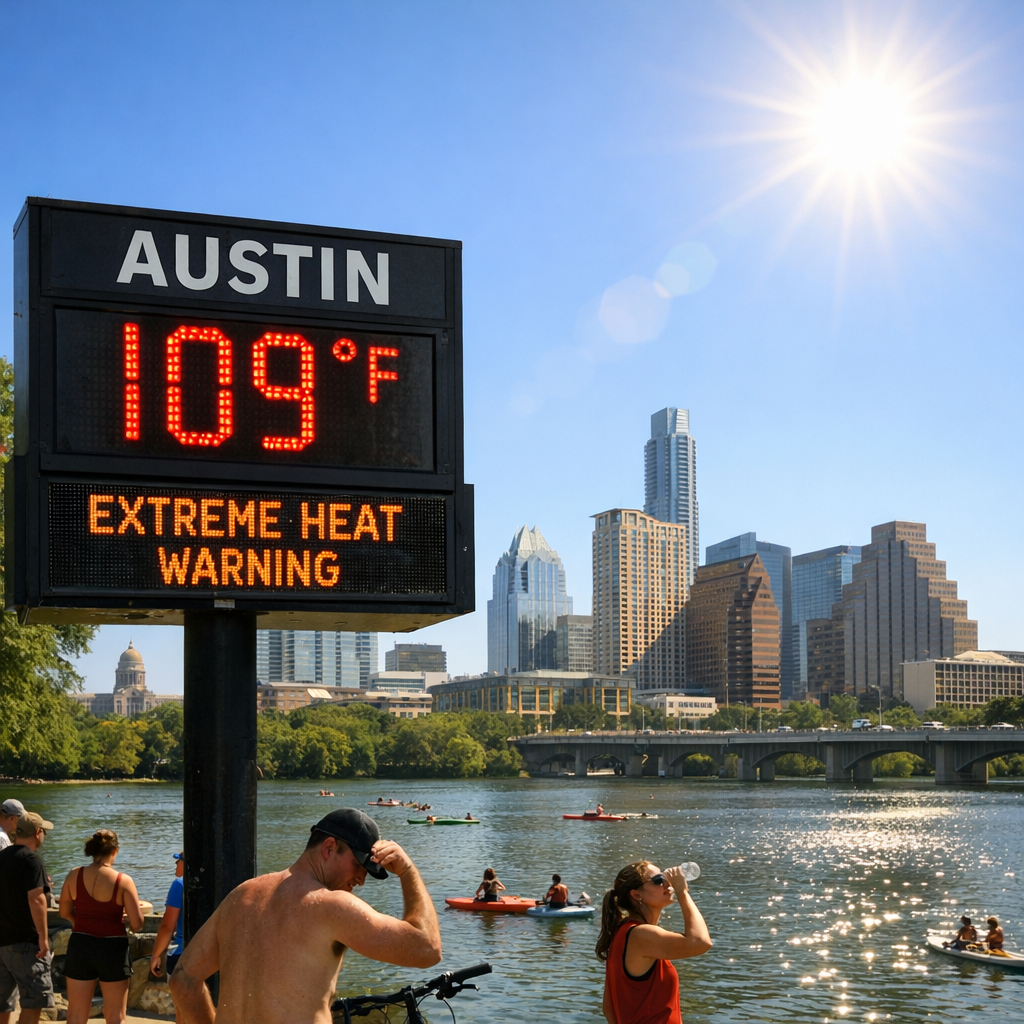
Austin’s climate is undergoing significant changes, with projections indicating a future marked by higher temperatures and more frequent extreme weather events. Understanding these trends and the city’s response is crucial for residents and stakeholders.
Climate Projections for Austin
Recent studies forecast notable shifts in Austin’s climate:
- Temperature Increases: Average daily temperatures are expected to rise, with maximum temperatures potentially increasing by up to 10°F by the end of the century under high-emission scenarios. Historically rare temperatures above 110°F may become more common. [Source: Austin Climate Action and Resilience]
- Heatwaves: The frequency of heatwaves—defined as three or more consecutive days of excessively hot weather—is projected to double by the century’s end. [Source: Austin Climate Action and Resilience]
- Precipitation Variability: While total annual rainfall may remain relatively unchanged, Austin could experience more extreme weather patterns, including both heavy rain events and severe droughts. [Source: Climate Change Response Framework]
Impacts on the Community
These climatic changes pose several challenges:
- Health Risks: Increased heatwaves elevate the risk of heat-related illnesses, particularly among vulnerable populations. A study by The University of Texas at Austin found that during heatwaves accompanied by power outages, 85% of single-family homes would pose significant health risks to elderly residents. [Source: UT Austin News]
- Environmental Concerns: Warmer temperatures can exacerbate issues like harmful algae blooms in local water bodies. For instance, Austin has been combating toxic blue-green algae in Lady Bird Lake through pilot programs aimed at reducing nutrient runoff. [Source: Axios]
City Initiatives and Community Actions
Austin is proactively addressing these challenges through various initiatives:
- Climate Action Plans: The city has developed comprehensive strategies to reduce greenhouse gas emissions and enhance resilience. These plans focus on sustainable transportation, energy efficiency, and community engagement. [Source: Austin Climate Action and Resilience]
- Water Conservation Efforts: Austin Water is committed to conserving the city’s water supply and natural environment. Their programs aim to protect water sources, reduce pollutants, and promote water-saving practices among residents. [Source: Austin Water]
- Urban Heat Island Mitigation: Efforts to increase urban greenery and implement heat-mitigating infrastructure are underway to combat the urban heat island effect, which intensifies heat in densely built areas.
How Residents Can Prepare
Community involvement is vital in adapting to these changes. Residents can:
- Stay Informed: Keep abreast of local climate projections and city initiatives.
- Participate in Conservation Programs: Engage in water and energy conservation programs offered by the city.
- Enhance Home Resilience: Implement measures to improve home energy efficiency and prepare for extreme weather events.
By understanding the projected climate changes and participating in local initiatives, Austinites can contribute to a more resilient and sustainable community.