

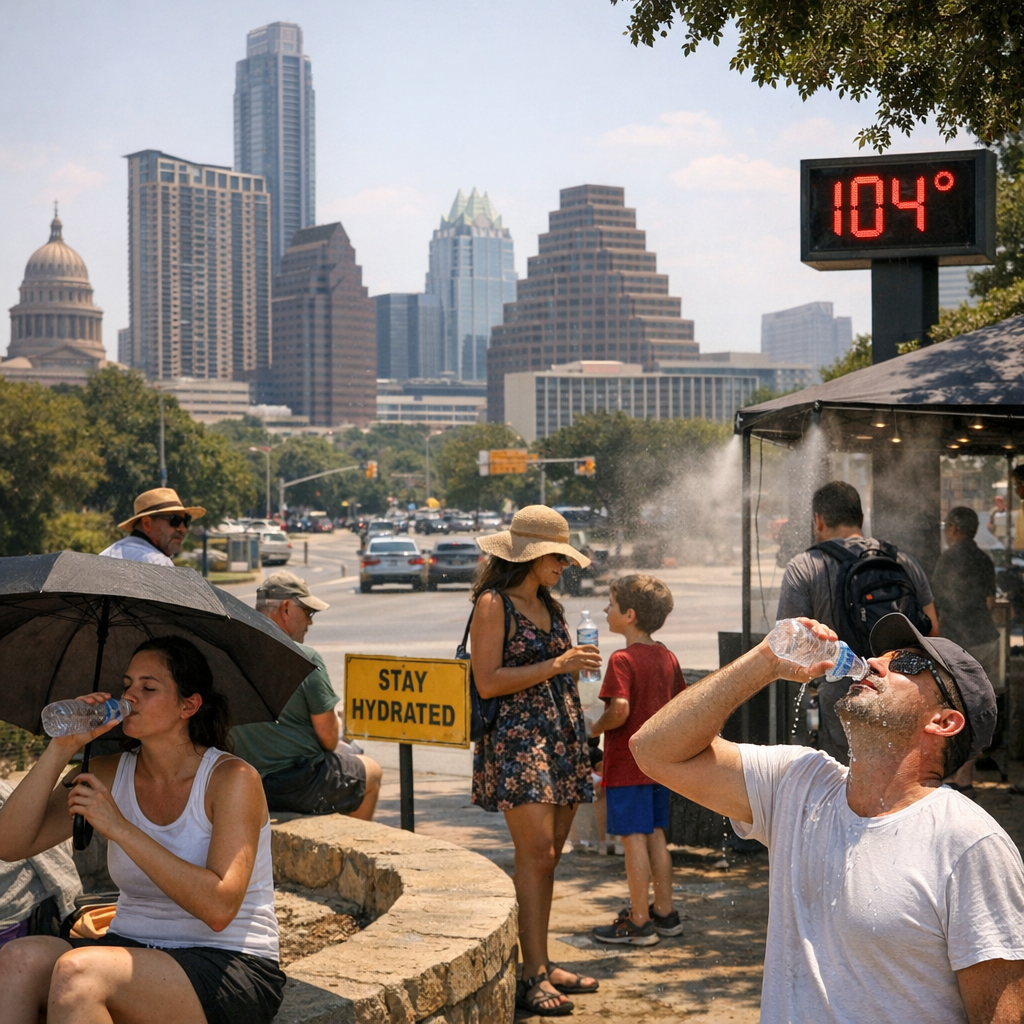
Austin, Texas, renowned for its vibrant culture and natural beauty, is facing significant climate challenges. Recent studies project notable shifts in the city’s climate patterns, necessitating proactive community engagement and adaptation strategies.
Projected Climate Changes
Research indicates that Austin’s average temperatures have been rising at approximately 0.4°F per decade since 1938. Projections suggest an increase of 5 to 10°F by the end of this century compared to the most recent 30-year average. This warming trend is expected to result in hotter summers, more frequent heatwaves, and fewer cold spells. Additionally, while overall precipitation levels may remain relatively unchanged, the city could experience more extreme weather events, including intense rainfall and extended droughts. These changes may also exacerbate current stressors such as non-native invasive plants, insect pests, and pathogens. Source
Implications for the Community
The anticipated rise in temperatures poses several risks. A study by the University of Texas at Austin found that if power outages occur during heatwaves, 85% of Austin’s single-family homes could pose significant health risks to elderly residents. The Rundberg and St. John neighborhoods are identified as particularly vulnerable. Source
Furthermore, the urban heat island effect, where urbanized areas experience higher temperatures due to reduced greenery and increased infrastructure, intensifies the heat. This effect is more pronounced in lower-income and historically redlined neighborhoods, where residents often lack access to air conditioning. Source
Community Initiatives and Preparedness
In response to these challenges, Austin has implemented several initiatives:
- Wildfire Mitigation: The Austin-Travis County Wildfire Coalition is updating its Community Wildfire Protection Plan, focusing on fuel mitigation activities like brush and vegetation clearance. Public meetings are being held to gather community input on prioritizing these efforts. Source
- Environmental Protection: Austin Water manages over 49,000 acres of wildlands to protect water sources and promote sustainability. These lands help recharge the Edwards Aquifer and provide habitats for numerous species. Source
- Construction Waste Management: The city mandates that large construction and demolition projects divert waste from landfills through recycling or reuse, aiming to achieve zero waste and reduce environmental impact. Source
Individual Actions
Residents can contribute to climate resilience by:
- Participating in local environmental programs and initiatives.
- Implementing energy-efficient practices at home to reduce heat vulnerability.
- Staying informed about local climate projections and preparedness plans.
By understanding the projected climate changes and actively participating in mitigation and adaptation efforts, Austinites can work together to safeguard their community against the evolving challenges posed by climate change.