

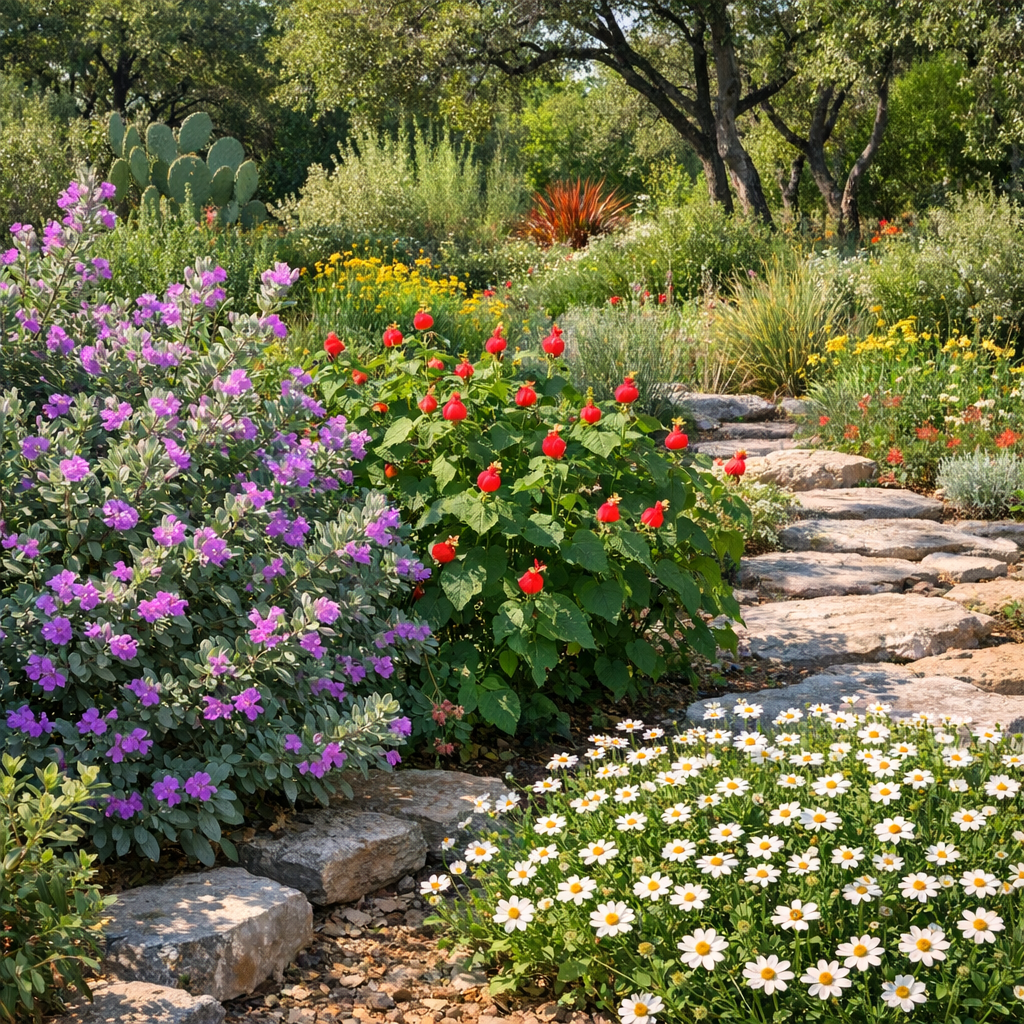
Austin’s unique climate presents both challenges and opportunities for gardeners. With hot summers, variable rainfall, and occasional droughts, selecting the right plants is crucial for a thriving garden. One effective strategy is to incorporate native plants, which are naturally adapted to the local environment and offer numerous benefits.
Why Choose Native Plants?
Native plants have evolved over time to thrive in Austin’s specific conditions. This adaptation means they typically require less water, are more resistant to local pests and diseases, and can withstand the region’s temperature fluctuations. By choosing native species, gardeners can create landscapes that are both beautiful and sustainable.
Top Native Plants for Austin Gardens
Here are some native plants well-suited for Austin gardens:
1. Texas Sage (Leucophyllum frutescens)
Also known as cenizo, Texas Sage is a drought-tolerant shrub that produces vibrant purple flowers after rainfall. It thrives in full sun and well-drained soils, making it an excellent choice for low-maintenance landscapes.
2. Turk’s Cap (Malvaviscus arboreus var. drummondii)
This perennial features bright red, hibiscus-like flowers that attract hummingbirds and butterflies. Turk’s Cap grows well in both sun and shade, providing versatility for various garden settings.
3. Blackfoot Daisy (Melampodium leucanthum)
With its white daisy-like flowers and low-growing habit, Blackfoot Daisy is perfect for ground cover. It thrives in hot, dry conditions and requires minimal watering once established.
4. Lantana (Lantana urticoides)
Lantana offers clusters of colorful flowers that change hues as they mature. This hardy plant is heat and drought-tolerant, making it a favorite among Austin gardeners.
5. Mealy Blue Sage (Salvia farinacea)
Known for its spikes of blue to purple flowers, Mealy Blue Sage attracts pollinators like bees and butterflies. It prefers full sun and well-drained soils.
Benefits Beyond Beauty
Incorporating native plants into your garden offers advantages beyond aesthetics. These plants provide essential habitats and food sources for local wildlife, including pollinators like bees, butterflies, and hummingbirds. Additionally, native plants contribute to soil health and reduce the need for chemical fertilizers and pesticides, promoting a healthier environment.
Getting Started
To begin incorporating native plants into your garden:
- Research plants that are native to the Austin area and suitable for your specific garden conditions.
- Visit local nurseries that specialize in native plants to find healthy specimens.
- Consider the light, soil, and moisture requirements of each plant to ensure they are placed in optimal locations.
- Start with a few native species and gradually expand as you become more comfortable with their care.
By embracing native plants, Austin gardeners can create landscapes that are not only beautiful and resilient but also supportive of the local ecosystem. This approach aligns with sustainable gardening practices and helps preserve the natural heritage of the region.