

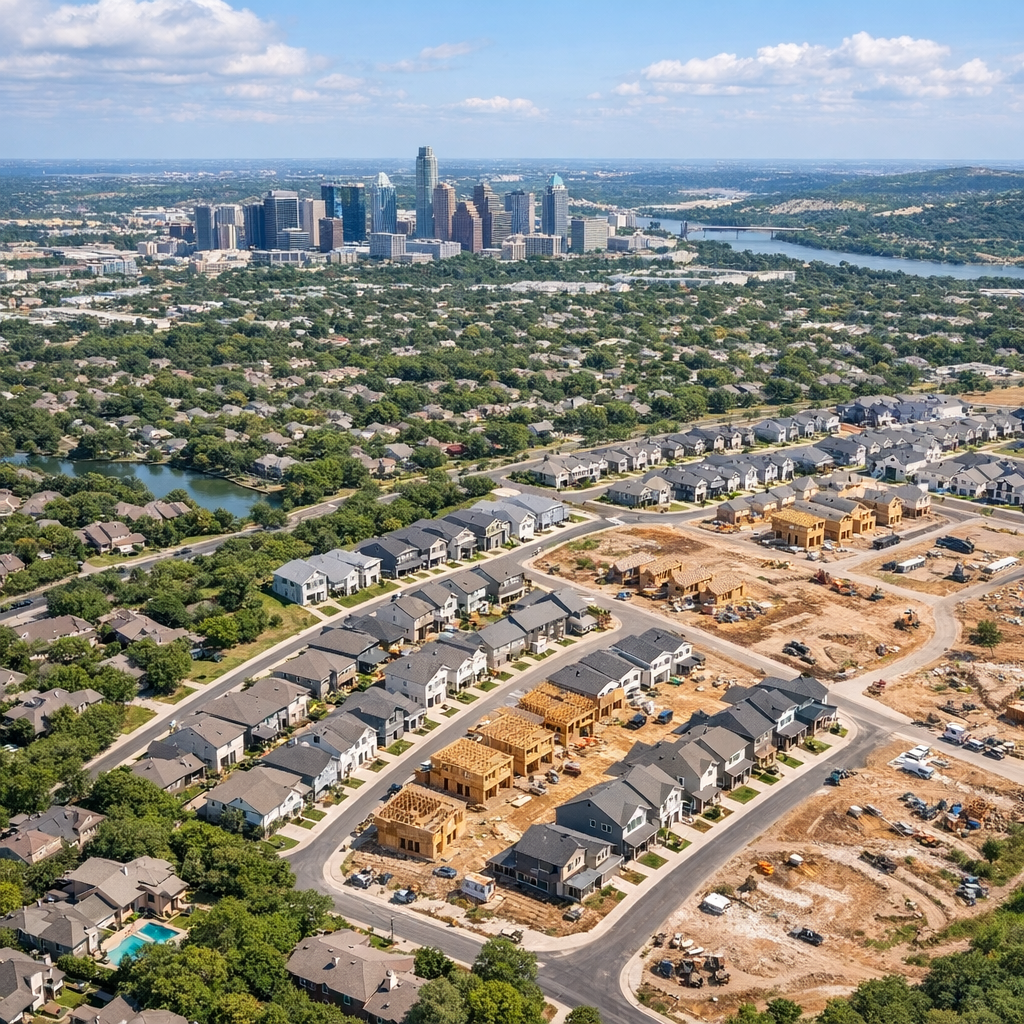
Austin’s housing market is experiencing notable shifts, reflecting broader economic trends and local developments. Understanding these changes is crucial for prospective buyers, sellers, and renters navigating the city’s real estate landscape.
Market Trends
Recent data indicates a slight decline in home prices. In March 2026, the median sale price was $530,000, marking a 2.2% decrease from the previous year. Homes are spending an average of 58 days on the market, a marginal increase from 56 days last year. Notably, the number of homes sold rose by 6.2%, with 838 transactions in March compared to 789 the previous year.
Inventory levels have also seen changes. Active listings reached 15,090 in April 2026, slightly below the July 2025 peak of 16,640. This abundance of options has contributed to a 3.2% year-over-year decline in median home prices, bringing the median to $434,628.
Rental Market
The rental sector has experienced adjustments as well. As of March 2026, the median rent in Austin is $1,850 per month, reflecting a 6.23% decrease from the previous year. The number of rental properties available has also declined by 18.88%, indicating a tightening market.
New Developments
Several new housing projects are underway to address affordability and community needs. The Weaver, a five-story mixed-income residential development in East Austin, offers 250 apartment units blending affordable and market-rate housing. Amenities include a rooftop terrace, community lounge, fitness center, and bike storage.
Additionally, the Austin City Council has supported six affordable housing proposals applying for Low-Income Housing Tax Credits. These developments aim to add over 400 new units across five districts, contributing to the city’s efforts to increase affordable housing options.
Looking Ahead
Real estate experts remain cautiously optimistic about Austin’s housing market. Factors such as job growth, particularly in the tech industry, and population increases continue to influence demand. While the market has cooled from its pandemic-era highs, these developments suggest a move toward stabilization and increased accessibility for residents.
Staying informed about these trends and developments is essential for anyone involved in Austin’s real estate market. As the city continues to evolve, opportunities arise for buyers, sellers, and renters to find options that meet their needs.