

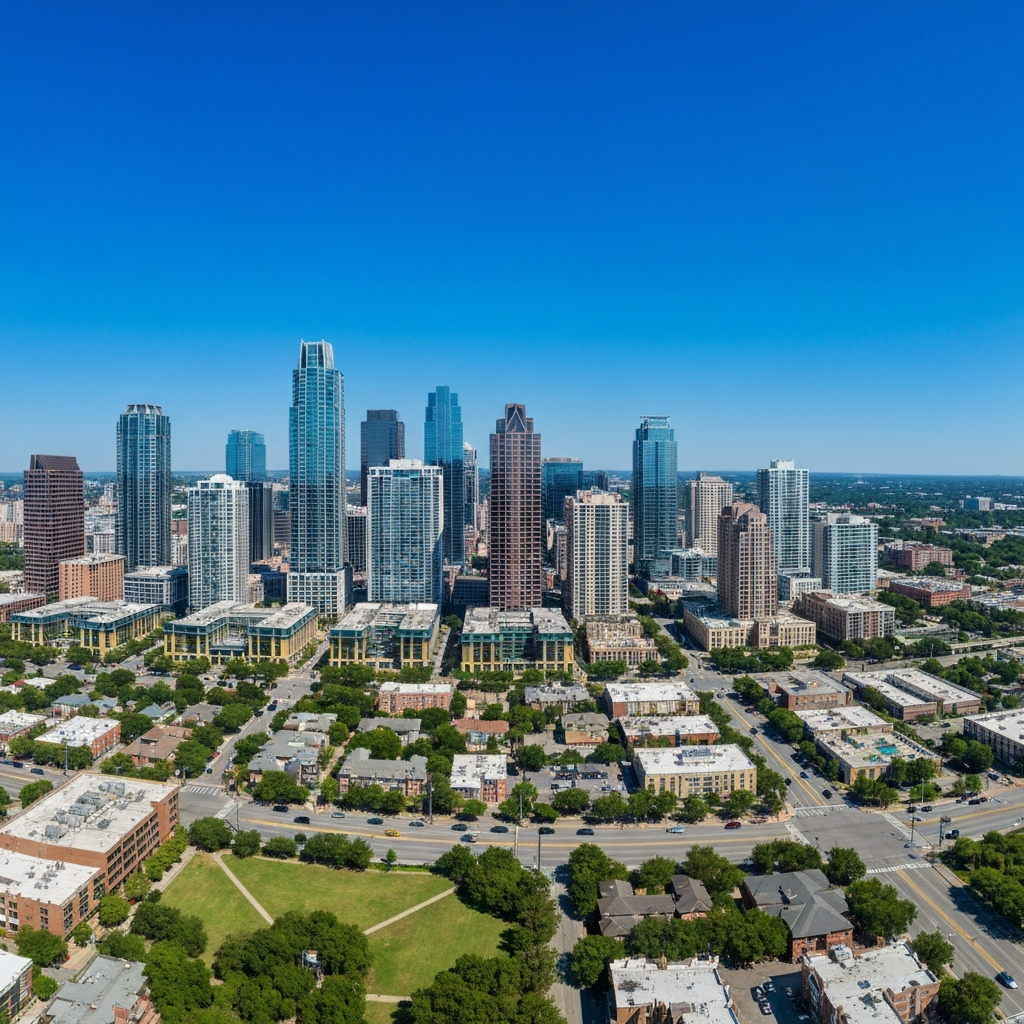
Austin’s housing market has experienced notable shifts in recent years, reflecting broader economic trends and local developments. Understanding these changes is crucial for residents, prospective homebuyers, and investors.
Home Values and Sales Trends
As of March 2026, the median sale price for homes in Austin was $530,000, marking a 2.0% decrease compared to the previous year. Homes are spending an average of 58 days on the market, slightly longer than the 56 days observed last year. Notably, the number of homes sold increased by 6.0% year-over-year, with 835 homes sold in March 2026. Source
Rental Market Dynamics
The rental market has also seen adjustments. The median rent in Austin is currently $1,850 per month, reflecting a 6.23% decrease from the previous year. This decline may be attributed to increased rental inventory and changing demand patterns. Source
Notable Developments
Several significant projects are reshaping Austin’s real estate landscape:
The Weaver
Located at 1401 Art Dilly Drive in East Austin, The Weaver is a five-story, mixed-income residential development offering 250 apartment units. This project contributes to a vibrant, multi-generational community along the Lady Bird Lake corridor. Source
Waterline Tower
Set to become the tallest building in Texas upon its completion in 2026, the 74-story Waterline tower will feature a mix of residential units, office spaces, and a hotel. This development is expected to significantly impact Austin’s skyline and real estate market. Source
TownLake YMCA Redevelopment
The Greater Austin YMCA has proposed a major redevelopment of its TownLake facility into a mixed-use complex. The plan includes a modernized YMCA campus, residential housing, child care services, and expanded social programs, aiming to better serve the community’s evolving needs. Source
Market Outlook
Real estate experts remain cautiously optimistic about Austin’s housing market. Factors such as job growth, particularly in the tech industry, and economic trends are expected to influence the market’s trajectory. Sellers are becoming more realistic with pricing, and there is hope that economic conditions will improve in the latter half of 2026, potentially revitalizing the housing market. Source
Staying informed about these trends and developments is essential for navigating Austin’s dynamic housing market.